A plan built on biomechanics, not on guesswork.
A great result starts with a great plan. Every Spee Aligner case is engineered around five clinical pillars — the same framework our specialists use to convert intraoral scans into staged, force-controlled, finish-ready treatment. No templated setups, no over-correction, no surprises in the chair.
Biomechanically Engineered
Every movement is planned against the biology that executes it — root morphology, bone support, and periodontal response. We model tooth displacement as a force system, not as a geometric shortcut, so aligners deliver the movement they promise instead of fighting the anatomy underneath.
Predictable Staging
Movements are sequenced, not stacked. We stage rotations, tips and translations in the order the biomechanics allow — anchoring first, then moving — so each tray executes a clean, achievable increment. The result is a timeline you can hand a patient with confidence.
Controlled Force Systems
Light, continuous, and directional — force is calibrated per tooth, per stage. We design auxiliaries, power arms and elastics into the plan from day one, so the appliance produces the intended moment-to-force ratio rather than a best-effort approximation.
Smart IPR Distribution
Interproximal reduction is treated as a space budget, not a last-minute fix. We distribute IPR across the arch only where it unlocks the movement — respecting enamel thickness, contact anatomy, and the Bolton ratio — and we mark it on the plan stage by stage, in tenths of a millimetre.
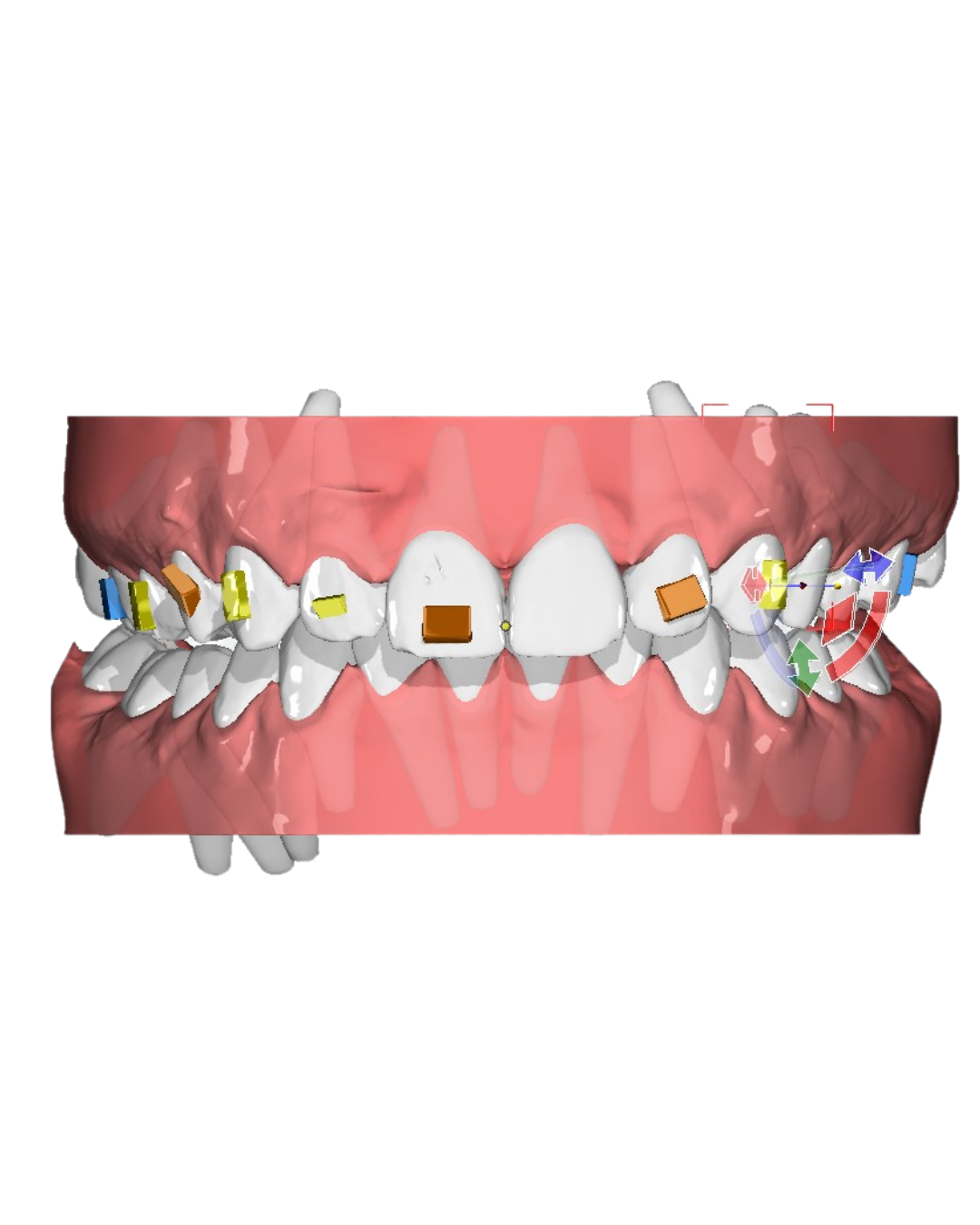
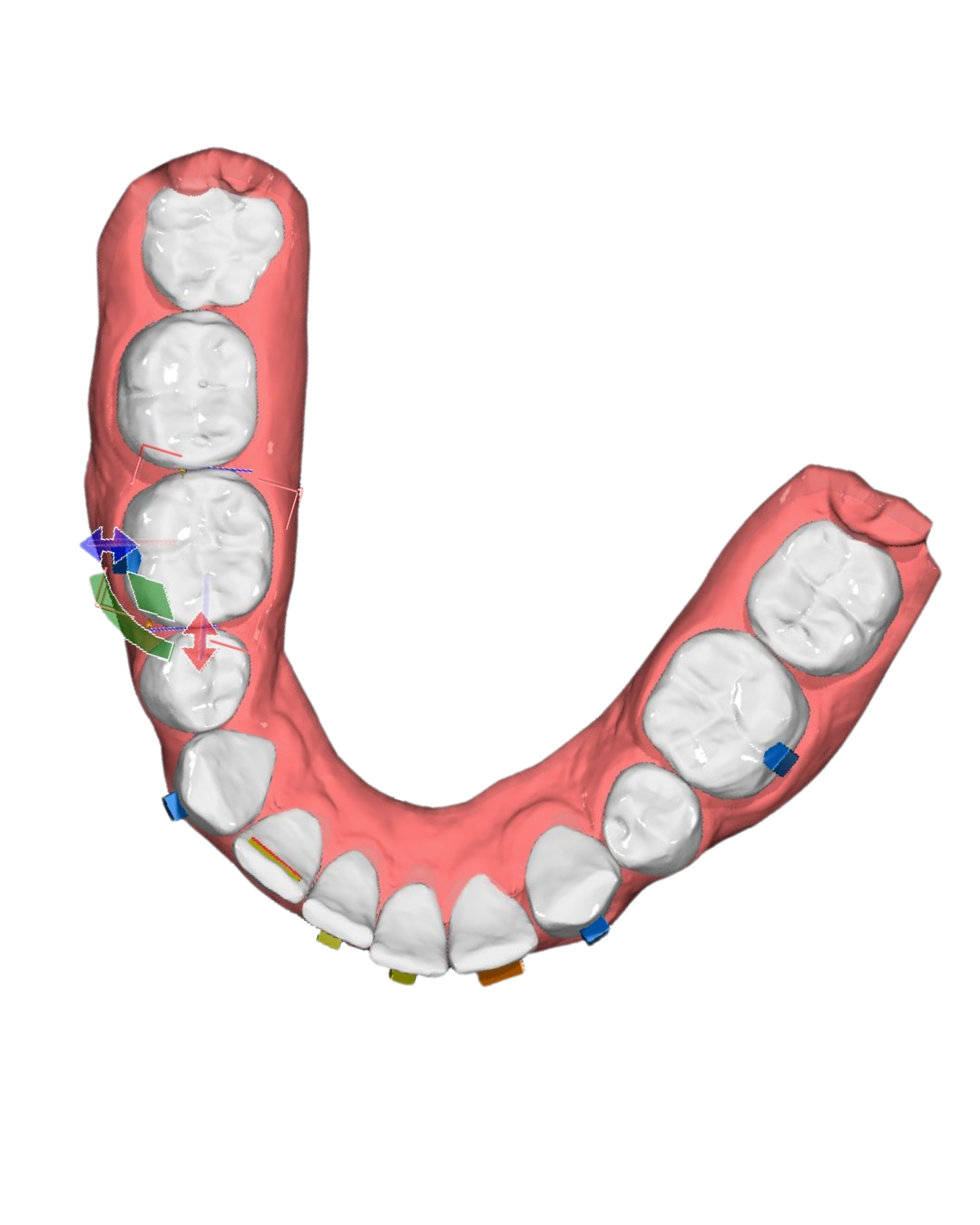
Optimized Attachments
Attachments are placed where the mechanics demand them — not by default. Each one is shaped, angled, and positioned to generate the force couple that the adjacent movement requires, so the aligner grips exactly where it needs to push and releases exactly where it doesn't.